Trained to fix everything.
Taught by his son what couldn't be.
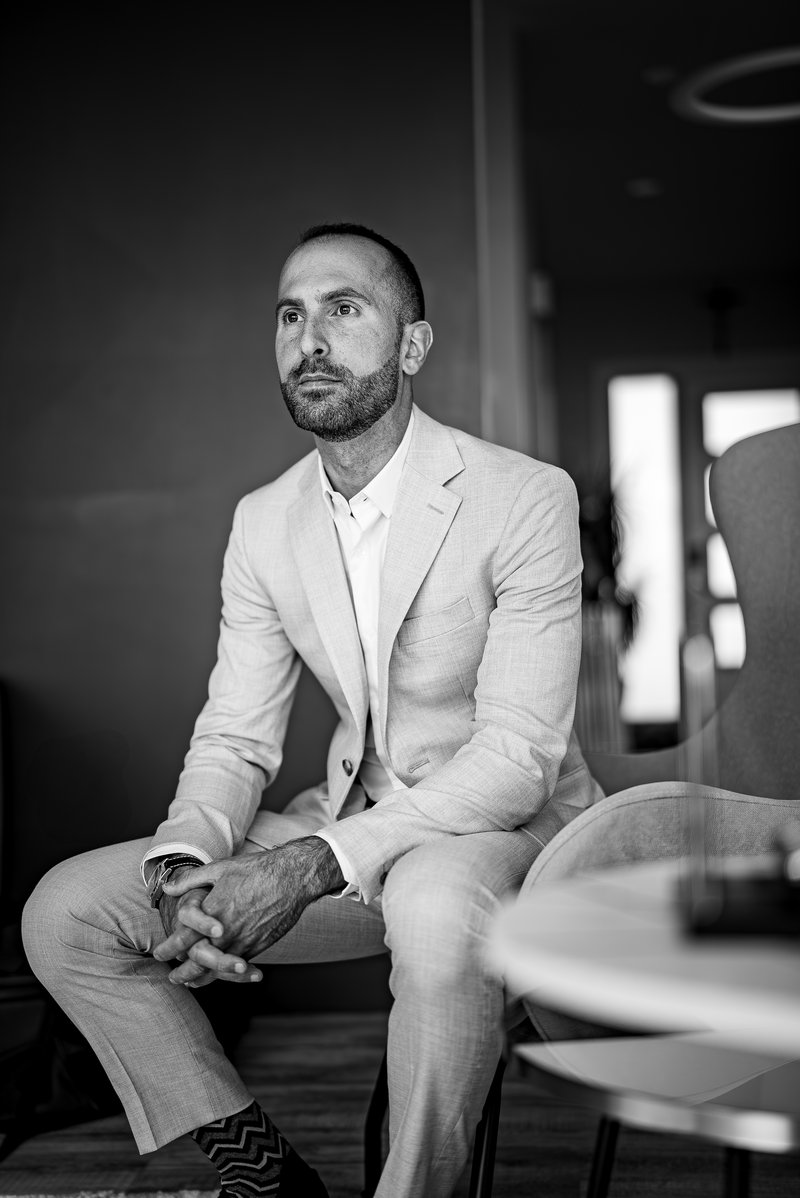
He studied physics, meant to work in space. Life had other plans, and he ended up in the back of an ambulance instead, trained to enter chaos, assess in seconds, and act. That training saved lives. It also taught him, on one call in the rain, that some things don't have a protocol.
“I did not solve anything. I could not. What I did was stay, in the rain, at three in the morning, with someone whose world had just ended, and offer the only thing that was actually available to me.”
He carried what he learned as a paramedic into operations, into provincial ambulance leadership through a pandemic, and eventually into the top seat of one of Atlantic Canada's largest continuing care organizations. For a long time, the ability to cut through noise and move to a solution was exactly what the room needed. It made him effective. It also nearly made him miss what his own son needed.
When his son Lucas was four and a half, his foot swelled overnight for no reason anyone could explain. Over six months, it happened again and again, moving through his hands, his face, his lips, while doctors searched for an answer. At one point Lucas hid his own swollen hand inside his sleeve, ashamed of his body in front of his father.
“I could not fix my son. I could only refuse to leave him alone inside it. That turned out to be the whole job.”
Lucas was eventually diagnosed with hereditary angioedema, a rare genetic condition. Treatment worked. He's a healthy, ordinary kid today, a word Charbel says he no longer takes lightly. He and his wife, Rebecca, now advocate publicly for HAE awareness, so the next parent in that emergency room finds answers faster than they did.
Charbel serves on the board of HAE Canada. Learn more about hereditary angioedema at haecanada.org.